


If your children do become dehydrated or overwhelmed in the heat, they are at risk for heat exhaustion and heat stroke. Smaller persons, such as women and children, are more susceptible to hyponatremia due to having smaller TBW and ECF volumes, therefore the same magnitude of overdrinking (as a larger person) dilutes a smaller osmotic content. Psychogenic polydipsia is the excessive consumption of fluid, especially water, among chronic psychiatric patients, but particularly those with schizophrenia (de Leon et al., 1994). This concept has been known since 1935 (Sleeper, 1935); however, it is still poorly understood.
METHODS FOR ESTIMATING HYDRATION STATUS
Dehydration will probably enhance the fever response and therefore has implications for management of clinical conditions. Rats dehydrated by a 24-hour water deprivation period exhibited a more severe fever than normally hydrated rats after being injected with bacterial endotoxin (Morimoto et al., 1986). The color of urine darkens or lightens with low or high output levels (because the solute load is either concentrated or diluted, respectively). Thus urine color has been used as an indicator of hydration status (Wakefield et al., 2002). However, no precise relationship between urine color and hydration level exists.
How much water do you need to stay hydrated?
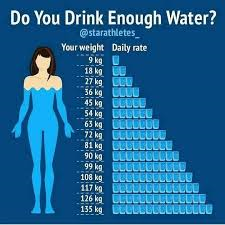
A good rule of thumb is to aim for a light-yellow hue in your urine (think lemonade). The BOROUX Legacy water filter system holds a substantial amount of water (3 gallons or 48 cups), which means fewer refills and easier access to filtered water. This convenience supports regular hydration without the hassle of frequent refilling. For larger households or those with higher water consumption needs, the BOROUX system can be refilled multiple times a day to ensure continuous access. One way to drink more water — and boost your health and reduce your calorie intake — is to replace other drinks, such as soda and sports drinks, with water.
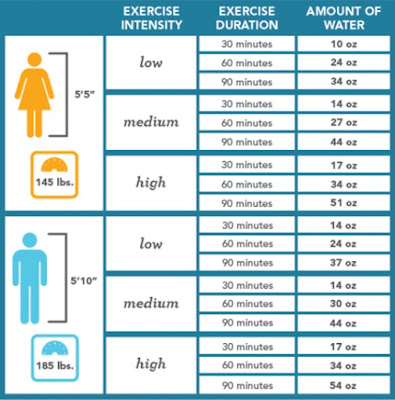
“Thirst is sometimes mistaken for hunger, so having a glass of water before eating can be a helpful way to pause and determine whether you’re actually hungry,” Brissette said. Still, if you aren’t currently drinking enough water at the moment and need an easy guide to follow, Johnson said aiming to have eight glasses of water a day is a good starting point. There are a few potential issues with the advice to drink eight glasses of water a day. “Eight glasses may be enough, but it depends on the size of the ‘glass’ and individualized needs,” Johnson said.
Lifelong learning offers many benefits for older adults
Urine specific gravities decrease with CID; however, they cluster around 1.009 (Bass and Henschel, 1956). CID induces an isoosmotic hemoconcentration, and there is little relationship between the magnitude of diuresis and hemoconcentration (Bass and Henschel, 1956; Young et al., 1987). The reduction in body water with contracting vascular volume is probably of no concern as long as the body remains cool. For “normally” hydrated (euhydrated) persons, urine specific gravity values range from 1.010 to 1.030 (Armstrong et al., 1994; Popowski et al., 2001; Sanford and Wells, 1962; Zambraski et al., 1974). Adolph (1947b) published individual data regarding urine specific gravity at different levels of water deficit (Figure 4-12). Urine specific gravity increases with water deficit; however, considerable individual www.hellopeter.com/unimeal variability exists.
Men consumed an average of 3.46 liters (L) or 117 ounces of water from all foods and liquids per day, while women consumed an average of 2.75 L or 93 ounces (Figure 1). As we mentioned previously, many foods with a high water content can easily be thrown into meals or eaten throughout the day to help you boost your fluid intake. Fruits and vegetables like cucumbers, celery, cantaloupe, limes, grapefruit, and zucchini are all water-rich and flavorful. The good news here is that there are a lot of easy hacks beyond just drinking water that you can implement into your routine to reach your daily recommended fluid intake.
Follow us on social media
Exercise and heat strain will reduce urine output by 20 to 60 percent (Convertino, 1991; Mittleman, 1996; Zambraski, 1996), while cold and hypoxia will increase urine output (Freund and Young, 1996; Hoyt and Honig, 1996). Copyright 1964 Handbook of Physiology, Section 4, American Physiological Society. “While more research is needed, the main theory regarding the mechanism by which hydration status might affect health and aging is through elevated levels of antidiuretic hormone,” Jacques says. From a nutritional standpoint, it’s best to choose low- or nonfat dairy milk or unsweetened varieties of plant-based milk to help minimize calories, saturated fat and added sugars.
Were there differences in mean total water intake per day by physical activity level among men and women?
Note that daily total water requirements increase with age from early infancy (approximately 0.6 L) through childhood (approximately 1.7 L). Since infants have rapid growth, some investigators express the daily water needs relative to body mass. Water production is an average of approximately 250 to 350 L/day for sedentary persons—but which can increase to 500 to 600 mL/ day for physically active persons (Hoyt and Honig, 1996). Hence, respiratory water losses are roughly equivalent to, or offset by, metabolic water production (Table 4-2; Hoyt and Honig, 1996). Metabolic water, a by-product of metabolizing energy-yielding nutrients from foods into carbon dioxide and energy, does not include the water present in a foodstuff itself. It is often determined analytically as the difference in weight of a food item before and after drying to a constant weight.
- BOROUX offers high-quality water filters designed to reduce contaminants and enhance the taste and quality of your drinking water.
- Therefore, a diary structured around meals is likely to underestimate total water intake because they are designed primarily to capture foods and extensions of this technique are unlikely to be sensitive enough to capture all drinking events.
- Although a urine specific gravity greater than 1.03 indicates probable dehydration, the magnitude of the water deficit cannot be determined.
- It is thus determined on a different scientific basis than other recommendations for water or fluid intake (NRC, 1989).
- Note that daily total water requirements increase with age from early infancy (approximately 0.6 L) through childhood (approximately 1.7 L).
- Climate change, increasing water scarcity, population growth, demographic changes and urbanization already pose challenges for water supply systems.
Staying hydrated during sports, exercise or heat
To stay well hydrated, children ages 1-3 years old need about 4 cups of fluids per day, including water or milk. This increases for older kids to around 5 cups for 4- to 8-year-olds, and 7-8 cups for older children. As discussed in Chapter 2, the average volume of human milk consumed during the first 6 months of life is estimated to be 0.78 L/day. Because approximately 87 percent of the volume of human milk exists as water, approximately 0.68 L/day (0.78 × 0.87) of water is consumed. Therefore the AI for total water for infants 0 through 6 months of age is set at 0.7 L/day after rounding to the nearest 0.1 L.
Preventing Dehydration In Older Adults
Your size, metabolism, location, diet, physical activity and health all factor into how much water you need to drink per day, says family medicine specialist Saadia Hussain, MD. BOROUX offers high-quality water filters designed to reduce contaminants and enhance the taste and quality of your drinking water. Staying hydrated is crucial for maintaining optimal health and well-being, and the BOROUX water filter system can help you achieve just that. With its efficient filtering speed, ample capacity, and advanced filtration capabilities, BOROUX Foundation Filters ensure access to high-quality water for the entire family. Prioritize hydration and experience the difference it can make in your daily life.
This disparity throughout Europe cannot be entirely explained by differences in environmental temperature or culture suggesting that differing assessment methodologies may be responsible for some, if not most, of the variation. Adult women should typically aim for a daily water intake of approximately 9 cups (about 2.7 liters, 0.71 gallons). Again, individual needs may vary based on factors like pregnancy, breastfeeding, and activity level.
It’s important to note that these amounts are not a daily target, but a general guide. In the average person, drinking less will not necessarily compromise one’s health as each person’s exact fluid needs vary, even day-to-day. Overall in 2009–2012, the daily average total water intake from all foods and liquids among U.S. adults aged 20 and over was 3.46 L for men, with 30% coming from plain water, and 2.75 L for women, with 34% coming from plain water. Total water intake was lower among men and women aged 60 and over than among younger adults.
Dehydration, Health, and Performance
Ambient air temperature and humidity modify respiratory water losses. Breathing hot, dry air during intense physical exercise can increase respiratory water losses by 120 to 300 mL/day (Mitchell et al., 1972). Breathing cold, dry air during rest and stressful physical exercise (Table 4-3) can increase respiratory water losses by approximately 5 mL/hour and approximately 15 to 45 mL/hour, respectively (Freund and Young, 1996). Body water is distributed between the ICF and the ECF, which contain 65 and 35 percent of TBW, respectively.
How to Stay Hydrated for Better Health
This defect in solute transport by the thick ascending limb of the loop of Henle could diminish inner unimeal app reviews medullary hypertonicity and thereby impair urinary concentrating ability. FIGURE 4-18 Approximate daily water requirements as a function of climatic temperature (Wet Bulb Globe Temperature, WBGT) and total energy expenditure (kcal). Fever is a regulated rise in body temperature and is a common response to inflammation, infection, and trauma (Blatteis, 1998; Leon, 2002).